










Our services
Dry Rot Specialists in London
Crown Preservation are dry rot specialists in London and the Home Counties, so our team has been carrying out dry rot and wet rot treatment in London homes, flats and commercial buildings for more than 30 years.
Every job starts with a proper survey. Our surveyors find out which type of rot you have, where the moisture is coming from and how far the decay has gone. Our own in-house team then puts it right, and all of our work is backed by a 30-year insurance-backed guarantee. As damp specialists in London, we fix the cause as well as the damage, so the rot doesn’t come back.
Call 0207 412 8267 for a no-obligation chat with one of our rot specialists.
What Is Dry Rot and Wet Rot?
Dry rot and wet rot are both types of fungal decay that break down timber in buildings. Both start with damp wood, but they behave very differently and that changes how they need to be treated.
Dry rot is caused by one fungus, Serpula lacrymans and it is the more serious of the two. Once it takes hold, it can send strands through brick, plaster and mortar to reach dry timber well away from the original damp. We find dry rot in London properties of every age, but it is especially common in Victorian and Georgian houses with suspended timber floors, cellars and old lath and plaster walls.
Wet rot is caused by a group of fungi, most often cellar fungus and it only grows in timber that stays wet. It is more common than dry rot and usually follows a leaking gutter, failed pointing, a poor window seal or a plumbing leak. Wet rot in London homes often shows up in window frames, door frames, floorboards and the ends of joists.
Signs of dry rot
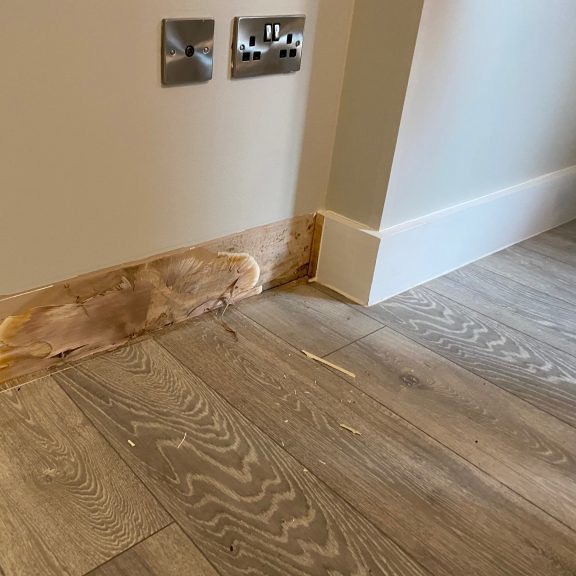
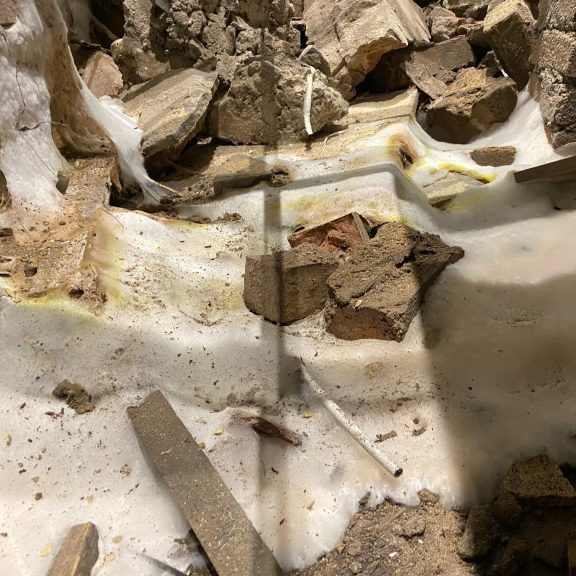
- White, cotton wool-like growth on timber or masonry
- Grey or white strands spreading across walls and floors
- Orange-brown fruiting bodies, often with a white edge
- Fine rust-coloured dust, which is spores
- Timber that has shrunk and cracked into cube shapes
- A damp, mushroom-like smell
Signs of wet rot
- Dark, soft or spongy timber that gives under pressure
- Wood that cracks along the grain and crumbles when dry
- Flaking paint on window frames and sills
- Decay close to leaks, bathrooms, gutters or ground level
Dry rot vs wet rot at a glance
| Dry rot | Wet rot | |
|---|---|---|
| Cause | One fungus, Serpula lacrymans | A group of fungi, most often cellar fungus |
| Spread | Can travel through masonry to reach dry timber | Stays in timber that is wet |
| Signs | White growth, grey strands, rust-coloured dust, cube-shaped cracking | Dark, soft, spongy timber cracking along the grain |
| Seriousness | Can affect a large area if missed | Usually localised, but can weaken joists and frames |
| Treatment | Fix the moisture, remove timber beyond the outbreak, treat masonry, fit treated timber | Fix the moisture, repair or replace decayed timber, apply preservative |
The two can look alike in the early stages and it isn’t unusual to find both in the same building. A survey is the only reliable way to know what you’re dealing with.
Our Dry and Wet Rot Treatment Services in London
Whether it is a single rotten window sill or an outbreak running under a ground floor, we handle the whole job from diagnosis to the final repair.
Dry rot treatment in London
Our dry rot treatment always starts with the moisture. We trace and fix the source first, because the fungus cannot survive without it.
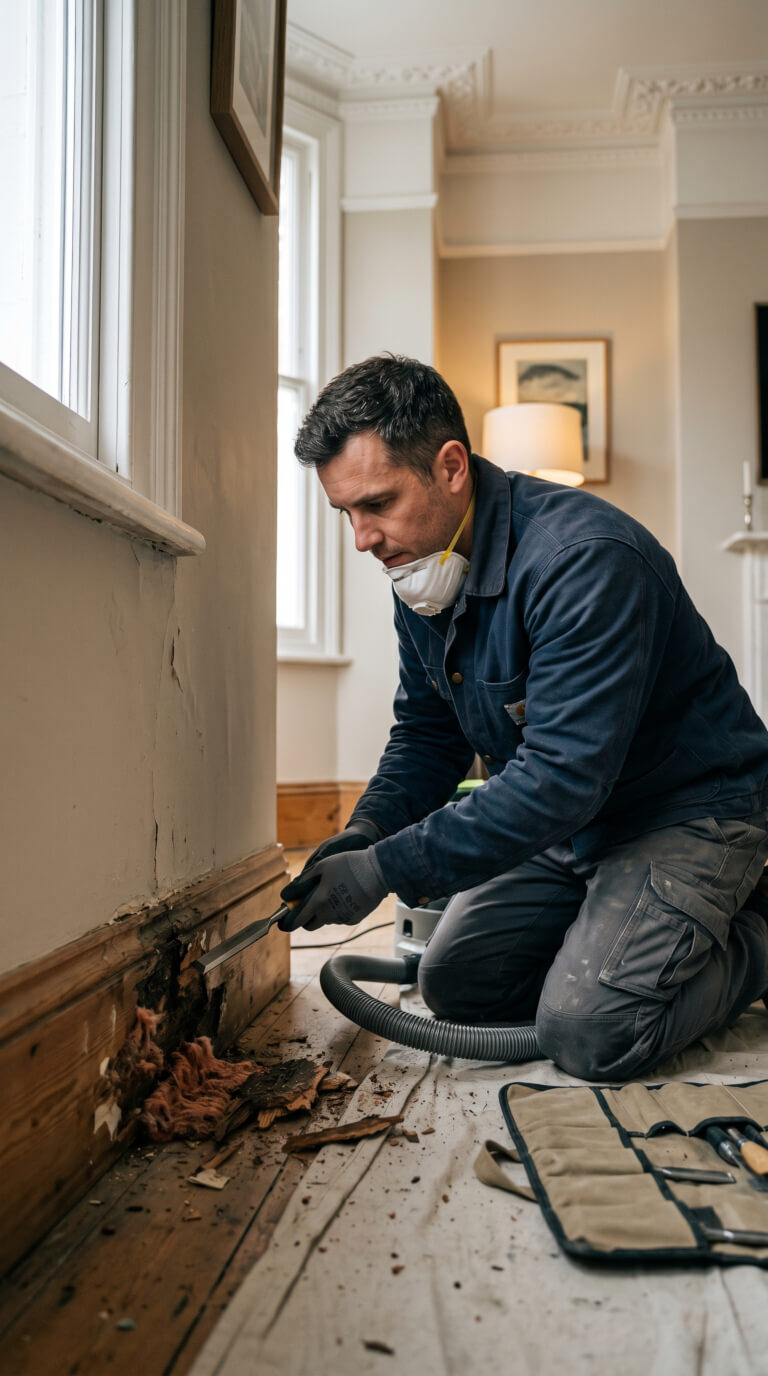
We then open up the affected area to find the full extent of the outbreak, cut out the decayed timber well beyond the last visible signs and treat the surrounding masonry so the strands cannot spread further. Replacement timber is pre-treated before it goes in.
Because dry rot can travel so far, it pays to call a dry rot specialist early. A small outbreak caught in time costs far less to put right than one that has spread into a floor or a party wall.
Wet rot treatment in London
Wet rot stops once the timber dries out, so our wet rot treatment in London focuses on the cause as much as the decay. Our wet rot specialists repair the leak or damp problem, cut out and replace or repair the damaged timber and apply a preservative to protect what remains.
Joists, floorboards, skirting, window frames and door frames are all common wood rot treatment jobs for our team. If the moisture is coming from inside the property, our condensation treatment service may also help.
Timber surveys for owners, buyers and landlords
If you are buying a property and the survey has flagged rot, or you are a landlord who needs to deal with decay before it affects a tenant, we can inspect the timber, confirm what is causing the problem and give you a clear written quote for any dry rot treatment or wet rot repairs needed.
Timber repair and replacement
Once the rot has been treated, our joiners replace or repair joists, floorboards, skirting, lintels and frames with pre-treated timber. Where wood-boring insects have also been at work, we can carry out woodworm treatment at the same visit.